Mac Demarco has an uncanny knack about making the complex seem simple, and the simple even simpler. While earlier in the year Demarco flirted with a barrage of stylistic directions, he has seemed to have found his laid back niche on 2. 2 has a down home feel that meshes well with his deprecating song subjects. The breezy musicianship provides a creative contrast to the dark and collapsing lyrics. The shining example is the fantastically innovative opener "Cooking Something Good." Here, Demarco sings about the doldrums of everyday life over loafing guitar sound. As the song progresses however, it becomes apparent that he is singing about his father making drugs in the basement. Similarly, 2's most heartfelt song is "Ode to a Viceroy," where Demarco sings about how much he loves cigarettes. 2's beauty and creativity lay not in the lyrics or instrumentation themselves, but the juxtaposition of the two. The result is a "Lemonade out of lemons" feel that is flawlessly executed, and makes the listener's wost day have a bright side.
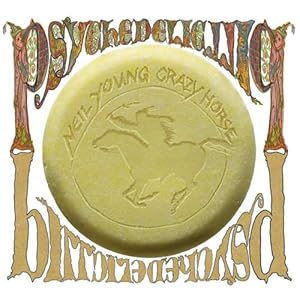
Neil Young can JAM! His knack for extended jams and proclivity towards improvisation is often overshadowed by his second to none songwriting ability, but when Young gets down, he can be as gritty as the jamband giants. With the release of Psychedelic Pill, Neil Young and Crazyhorse's first "proper" album in what feels like forever, Young and crew put his folky songwriting to the side for a good dose of instruments.
When Neil Young teams up with Crazyhorse, there is often a heavier sound, and Psychedelic Pill is no exception. Dense with reverb and feedback, the album title is very apropos. Throughout the psychedelia of the album, however, Young stays true to his form, as he clearly prefers the driving of noise, rather than a sound that is ethereal and spatial. Within Psychedelic Pill, Young prefers to use his instrumentation as a way to induce trance, most evidenced by his 27 minute opener, "Driftin' Back," a song that employs a simple chord progression with heavy Crazyhorse overlays. Despite the extended songs, Psychedelic Pill is still classic Neil Young. The songs, no matter how long, still use the traditional verse-chorus-verse format, Young just extends the breakdowns in between. Young often utilizes this style in live shows, so Psychedelic Pill is a great example , and a beautifully accurate portrayal, of Young and Crazyhorse is their rawest form. Also, the sound of Psychedelic Pill, does not necessarily break new ground for Young, but rather highlight his talents and strong suits; a much better exercise for someone with his age and credibility.
Per usual, Neil Young writes songs about getting old. Those even remotely familiar with Young's work know that age is his preeminent fixation. While some may consider the continuing subject bordering on schtick, one must look at the world through the eyes of Neil Young, a man who has stayed relevant through a seemingly endless gabal of trends and styles. As an icon of cool, who has withstood decades of cultural vogue, Young is allowed to wear his age on his sleeve.
Neil Young, and whatever entity he plays with, seems to have the Midas touch. every note produced by the Canadian idealist still turns to gold. Psychedelic Pill is another shining example of this, as Young and Crazyhorse capture their magic on record once again. It is incredible to hear an album like Psychedelic Pill, a work that, after all these years, still hold up in the Neil Young pantheon of works.
Tame Impala are the true sixties revivalists. They exude the creativity and willingness to push the envelope more than any other bands in their respective genre. They don't try to recreate the sounds of the sixties, but intensify them. When the band released their 2010 breakthrough debut, Innerspeaker, the indie world saw a nearly perfect melange of psychedelic playfulness and pop sensibility. With the release of their sophomore, Lonerism, Tame Impala have proven their talent was not a shot in the dark.
Lonerism further explores Tame Impala's brilliant sense of sounds, as the songs are awash in layers of lo-fi instrumentation, with a splash of synth. While Tame Impala is not an electronic band, they have adopted a more freestyle approach to songwriting, not being weighed down by typical verse-chorus-chorus structure. The music tends to wash over the listener like waves, continuously flowing and rolling, rather than being broken down into different song parts. Lonerism exhibits Tame Impalas nearly flawless knack for combining organic and inorganic sounds into one sonic swirl. The band uses traditional classic rock subtleties, with synthetic sounds interwoven in between. The result is a level of layer and texture not done with this level of tact and grace; think surf rock, but played within a lucid dream.
Lonerism, expectantly, continues to deal with the band's, especially leader Kevin Parker's, feelings of alienation. This is seemingly a cliche and transparent tool of the indie rock enterprise. On closer inspection, Parker makes a clever twist on the notion; one that perfectly compliments the psychedelia of Lonerism. Where the norm of alienation songwriting is pining over an object of affection, or the demoralization not being cool enough for others, Tame Impala dig deeper, harkening back to sixties classics like Revolver. The lyrics on Lonerism sing about being on a different plane than the rest of the world. There is no depression or distress in the words, more just a passive expression of being lost in a different world, expounding further on their psychedelic masterpiece.
Lonerism is a psychedelic oeuvre of sonic genius. In the past several years, the indie world has done a good job recreating a psychedelic music scene, with different bands exploring different levels of the ether. Lonerism is a benchmark of this continuously growing genre, and solidified Tame Impala's seat near the top of the psychedelic hierarchy. Truly a masterpiece album.
So, the first thing listeners, especially Phish fans, must do before listening to Traveler, is to wash away any preconceived notions about what Trey Anastastio "should" sound like. If not, it will surely be a disappointment. Trey has always used his solo records to pursue his musical interests independent of Phish, and this time is no different. For Traveler, the jam band jedi opted to release an unapologetically studio based album as he delves into his own version of indie pop. Throughout the album, Anastasio offers up concise, catchy, tunes that are good, but may rub his fanbase the wrong way.
For quite some time now, Trey has been showing a proclivity to the indie scene, so Traveler should come as no surprise to Phish fans familiar with Trey's solo forays. Traveler's songs are often poignant, very apropos for his current life. Anastasio uses many of the brass and vocals typical to his solo records, but was also able to get his indie rocks off by working with indie icons such as The National and Mates of State. The resulting sound is a slightly more haunting, spacious sound, not often found in his other solo work. The indie-ish use of effects and textures give much of Traveler a dreamier sounds then his previous solo work, while still holding firmer to the ground than Phish. Despite this, Trey is not afraid to bring his funk, most evident in the driving, "Pigtails," a song, which, per usual, has sub-par lyrics, bobs heads. Another highlight is Anastasio's unbelievably funky take on the Gorillaz classic, "Clint Eastwood," which melts and molds its way through electrofunk, rock, and rap. All enhanced by Jennifer Hartswick's beautiful, soulful, voice.
Phish fans, be not afraid, there are plenty more YEMs to be had. Traveler is for Trey. One thing that has made Phish so great is their ability to experiment with sound, and try new and different styles. While this sound will not work for Phish, it does work well for Trey. Those who are able to set aside their thoughts of what the album should be will be able to see Traveler's pleasant results.
Way back in 2006, the English based DJ, Little People (AKA Laurent Clerc) released his debut masterpiece Mickey Mouse Operation. While the album's dark thematic sound was raved by critics, poor promotion and Clerc's own malaise pushed the record, and his career off to the side. However, the ever growing musically accessibility of free internet radio resurrected Little People, as fans began to once again hear his unique sound. Now, many years later, Little People comes out with his Sophomore effort, We Are But Hunks Of Wood.
With its opening "Marzipan Children," Little People blazes a new trail for himself. Gone are the minimalist drum and bassloops of the past, exchanged for a sweeping digital sounds. The samples are virtually non-existent throughout the album, as that was his overlying problem with his previous work, along with the genre in general. The album is far heavier on full electronic sounds and layered arrangements. The sweeping textures throughout We Are But Hunks Of Wood result in a far fuller, more complex, sound. The basic tenants of Little People are present throughout the album, as it still waxes moody and emotive. We Are But Hunks of Wood simply expounds on Clerc's rookie effort, and shows a beautiful maturation. We Are But Hunks Of Wood shows a revitalization of a brilliant DJ's career, as well as a beautiful set of mercurial electronic music. As Laurent Clerc finds his sound and style, the electronic world can groove easy knowing that the wildly talented wunderkind is back.
Most artists endeavor to release albums that push the envelope or break new ground. Musicians always seem to be striving for their own respective "Sgt. Peppers." Such is not the case with Poolside, a Los Angeles based duo who came together to record their first LP, Pacific Standard Time, this summer. The two partners came together, self-reportedly while drunk, to release a breezy summer album that does nothing but go along with a lazy Los Angeles afternoon.
Many critics would probably pan this album as an unimpressive example of the already over saturated chillwave genre. To those critics defense, Pacific Standard Time's dancey synth beats, and simple vocals caked effects, is nothing that has never been done. The formula is all pretty standard. Chastising a chillwave band for oversimplifying, however, shows a definite misunderstanding of the goal of the genre, and especially Poolside. These guys are not Pink Floyd; the listener does not crawl inside the structure of the album and slowly dissect it. Rather, Pacific Standard Time is an accompaniment to another activity. It is the background soundtrack of whatever setting and proceeding the listener to which the listener is doing, be it cleaning the house, or relaxing on a Los Angeles beach. The languid disco beats are damn good, and the entire album is driving and engaging. The easy mood of Pacific Standard Time makes the album approachable to all listeners.
After all is said and done, Poolside is a lazy L.A. duo who know their strengths and limitations. Instead of reaching for a level they cannot possibly achieve, the band sticks to what they know: head-bobbing, languid, tunes about girls and sunsets. While the album itself may not be genius, the thematics of Pacific Standard Time are brilliant, as the band clearly achieved what it set out to.
Lupe Fiasco represents a new era in rap music. Where transparency and bluntness were once the benchmarks of the hip-hop scene, Fiasco seems to gravitate towards the abstract. Instead of plain story telling he uses perverse analogies and lively imagery to convey his message of injustice and redemption. After a disappointing sophomore album (even admitted by Fiasco, himself), the Chicago based rapper returns with Food and Liquor II: The Great American Rap Album.
Musically, Food and Liquor sees a mellower Lupe Fiasco. Outside of his standard forays into rock, the album evokes a moody emotive vibe, rich in texture and layers of sound. It results in a seemingly more mature rapper, able to wait for his moment. Throughout Food and Liquor, Fiasco implores different instruments and samples to create a full sound that shows his progression as an artist.
Lyrically, Fiasco continues to remain on the lunatic fringe of the hip-hop world. Food and Liquor shines brightest when the artist allows himself to leave subject behind and use his imagery to paint the picture of the song. Unlike the majority of credible rappers, Fiasco is not a great storyteller, but rather a great wordsmith who uses semantics as the subjects main conveyance. Truthfully, Food and Liquor flounders most when Fiasco tries to stay on subject, as often his songs build up into too simplistic of a climax. Food and Liquor II shows a step up for Lupe Fiasco, but still not where critics originally thought he could be. He teeters on the brink of genius, only to pull himself back. As Fiasco progresses through his career, he may be able to find the tact that helps him blast off, but until then the world can take pleasure in the fact that Food and Liquor II: The Great American Rap Album, is pretty good.