The War on Drugs released their debut album, Wagonwheel Blues, in 2008. This album was a nonstop highlight reel of Americana. Slave Ambient takes this same principle, and expounds on it tenfold. The band continues its traditional rock and roll style, with raspy vocals, evocative of Springsteen and Dylan, and traditional instrumentation, but adds a futuristic touch, adding synthy layers and ambient jams. The culminating sound is awe-inspiring....honestly, no blog will do it justice. Just go listen to it.
Friday, September 23, 2011
The War on Drugs: Slave Ambient.
It is a rare treat when a band can channel both the past and future within one incredible album. Slave Ambient by Philadelphia raised The War on Drugs does just that. Plain and simple, this shamefully underrated band has released not only the best album of 2011 (stated with absolute confidence, even though it is only September), but one of the greatest works in the last several years.
The War on Drugs released their debut album, Wagonwheel Blues, in 2008. This album was a nonstop highlight reel of Americana. Slave Ambient takes this same principle, and expounds on it tenfold. The band continues its traditional rock and roll style, with raspy vocals, evocative of Springsteen and Dylan, and traditional instrumentation, but adds a futuristic touch, adding synthy layers and ambient jams. The culminating sound is awe-inspiring....honestly, no blog will do it justice. Just go listen to it.
The War on Drugs released their debut album, Wagonwheel Blues, in 2008. This album was a nonstop highlight reel of Americana. Slave Ambient takes this same principle, and expounds on it tenfold. The band continues its traditional rock and roll style, with raspy vocals, evocative of Springsteen and Dylan, and traditional instrumentation, but adds a futuristic touch, adding synthy layers and ambient jams. The culminating sound is awe-inspiring....honestly, no blog will do it justice. Just go listen to it.

Thursday, September 22, 2011
Toro Y Moi and the chillwave movement
In the last twenty years, electronic music has evolved from a computer nerd experiment, to drug culture soundtrack, to a credible and tenable genre of music. Since its inception, electronic music has branched into several different sub-genres, and has matured from simple blips to textured compositions, and no production displays this sophistication as the chillwave movement, led by Chazwick Bundick (AKA Toro y Moi)
In 2011, Toro y Moi released his sophomore effort, Underneath the Pine. This album was welcomed with rave reviews, and proved that this artist is at the forefront of the electronic chillwave movement, and that his previous effort was not a fluke. Underneath the Pine highlights Bundick's second to none amibtion, and his ability to pursue new direction rather than rest on his laurels. Underneath the Pine, although still clinging to the skeleton of his sound, opts for more organic textures (organ, chimes, and even a live drummer!) rather than the synth pop of Causers of This. Additionally, songs like "New Beat" see above show off Toro y Moi's penchant for funk music, while still remaining rooted to his signature warmth and melody. The results of his enterprise is one of the best LP's of 2011.
Within the next couple of years, the popularity of this new chillwave movement will almost definitely subside as the next new sound hits cities across the universe. With that, thousands of bands and DJs will search for new jobs, or find a new sound for new ears. As this happens, however, the true greats of the chillwave movement will stand, and continue to release amazing work. Not the least of these is Toro y Moi, whose talent will continue to seduce fans in both the indie and electronic genres. Soon enough, hundreds of chillwave artists, as well as the name chillwave, will be nothing but an urban memory, but the work of Chazwick Bundick will not.
Chillwave, a moniker that has blossomed simultaneously in various hipster friendly locales, can be characterized by electronic or Indie based music filled with synthesizer loops and effects processing. Chillwave often involves vocals, but they are heavily filtered through reverb effects. The resulting effort is music that evokes a spacey "shoegazy" vibe. The dreamy sounds have been popularized by urban cynicism, hope, and the reemergence of psychedelic experimentation among intellectuals.
The release of Panda Bear's Person Pitch, see above is universally accepted as the inception of the chillwave movement. Since then, a seemingly endless array of artists have emerged that can be classified as part of the chillwave movement. Sadly, many creative artists have been drowned out by groups who practice benign effects and ambiance for the sake of the trend. While it is a shame that the genre is quickly undergoing harsh commodification, it has subsequently allowed for creative minds to offer unbelievable variations on the art form, and expounding upon an already A-typical genre of music. No other music shows this occurrence as Toro y Moi.
Chazwick Bundick (AKA Toro y Moi) subscribes to most of the credos of the chillwave movement, but his sound is based more principally on hip-hop. Toro y Moi incorporates ambient loops, synths, and filtered vocals just as tactfully as any other artist on the scene, but has applied them to beats and funky rhythms to create mellow sound, albeit not enough to be classified as downtempo. There is enough progressiveness in his tunes to make some of his songs somewhat danceable, even though his albums have a dulcet, lounge, vibe.
Toro y Moi blasted on the scene in 2010 with his debut album, Causers of This. While released in during the heat of the chillwave movement, Toro y Moi opted for a more electronic vibe, over the indie rock of his colleagues. His sound offered electronica fans a more mild option than the intestine rattling dubstep prominent on the digital scene. Where dubstep's emphasized intesity, Causers of This relied on rhythm and textures. The result is stunning pathos; something rarely found within the electronic world.
Within the next couple of years, the popularity of this new chillwave movement will almost definitely subside as the next new sound hits cities across the universe. With that, thousands of bands and DJs will search for new jobs, or find a new sound for new ears. As this happens, however, the true greats of the chillwave movement will stand, and continue to release amazing work. Not the least of these is Toro y Moi, whose talent will continue to seduce fans in both the indie and electronic genres. Soon enough, hundreds of chillwave artists, as well as the name chillwave, will be nothing but an urban memory, but the work of Chazwick Bundick will not.
Sunday, May 15, 2011
Fleet Foxes: Helplessness Blues

The recording process of Helplessness Blues was not carefree and breezy as the sound would suggest. Throughout the cultivation of the album, the band toured extensively, and scrapped almost an entire albums worth of material before coming up with these songs. The band, most explicitly vocalist Robin Pecknold, revealed how trying it was for a Fleet Foxes to produce an album as revered as their debut.
The fruits of this arduous process is an incredible album: one of the best of 2011. Helplessness Blues comes together in beatific acoustic sound. For this latest album, all of the essential parts of the Fleet Foxes are present: Acoustic guitars, vocals laced with wistful reverb, gorgeous harmonies, and Americana lyrics. Helplessness Blues, however, is far more intricate than its predecessor. The album is deeper, which allows the songs to unfold into greater depths. While the band holds steadfast to their folky sound, there is much more instrumentation and texture to Helplessness Blues. There is a saxophone solo in "The Shrine, An Argument," chirping flutes in "Grown Ocean," and more complex musical interplay throughout the entire LP. The album also has a slightly darker tone, which adds a more analytical mood to the album, while still keeping it optimistic and unpretentious.
It was a long hard rode for Fleet Foxes to release this album, but the work paid off in brilliance. The band has constructed a folk/indie masterpiece that captures all the mood of American Escapism, without pomp or overbearing grandiosity.
Tuesday, April 26, 2011
Panda Bear: Tomboy


Listeners, especially new ones, must approach Tomboy with an open mind, as Lennox employs his typical blips, synths, and HEAVY reverb effects. It is a shame that the indie rock scene has been so over-saturated with artists who use these effects unsuccessfully, as they have become as prevalent as auto-tune in pop music. Tomboy is not a particularly accessible album, as it is ample on noise, and devoid of melody. Still, Lennox creates a beautiful album, exchanging Person Pitch's driving electronic beats for hazy atmospheric sounds. The opening song, "You Can Count On Me," seems to expand forever, and "Scheherezade" is downright creepy with its lonely, isolated sound and mood.
Panda Bear's Tomboy may never take the radio by storm, nor sell an exorbitant amount of copies, but few can argue the creativity Noah Lennox possesses. This latest effort lives up all of Lennox's previous efforts, and continues to solidify his reverence as indie rock legend.
Monday, April 18, 2011
Atmosphere: Family Sign

With Family Sign, Atmosphere continues the exploration of Slug's self pity and bad habits. Typically, at this point, this could be considered schtick, but Slug is so well-spoken that it is forgivable. Songs like "Bad Bad Daddy" portray him as getting shitfaced at a bar with his kids in tow. Slug's words are poignant and mature, but par for the course. Some fans might be let down by the abundance of gloomy ballads on the album, and the scarcity of self-deprecating humor. Many times throughout the album, Slug sounds like he has lost his perseverance, and is nothing more than a grumpy old man.
The biggest Difference between Family Sign and previous Atmosphere efforts is the introduction of a keyboardist and a guitarist. The opening song, "My Key," announces a new frontier for the bands sound. A full band adds another dimension to the music, and serves as a great enhancement to the words. Distorted guitars and haunting keyboards only augment Slug's world-weary raps. Instrumental breaks also provide emotional buildup, and time for the listener to soak in the lyrics, which, in typical atmosphere fashion, often tell a story. The full band, however, does not have the power to gain or lose fans, as Family Sign is still undeniably Atmosphere.
Monday, April 11, 2011
The Strokes: Angles
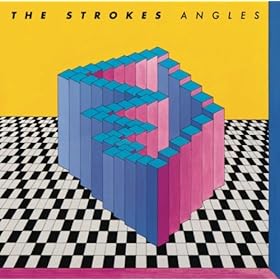
They have now released Angles, which is something of a return to classic Strokes form, although slightly tweaked. The band reemerges as a post-punk band. The difference is, however, is that where initially The Strokes sounded like a band playing CBGB's in the early 70s, they now sound like a band playing there in the early 80s. This most recent album has a more polished New-Wave sound, abandoning their raw guitar work for more precise instrumentation, and laced with synthesizers. Despite it's more lacquered sound, Angles is still a return to the short punchy rock that put The Strokes on the map. Fans of The Strokes, as well as post-punk in general, will enjoy the music throughout. The music seems a little sadder on this album, best evidenced by the song "Call Me Back," which forgoes any percussion, and only has sparse keyboard and guitar to aid the vocals. Some of this dolefulness may stem from lead vocalists Julian Casablanca's apathy to this album (as of late 2009, he was unsure of the future of the band, and even after he committed to the project, opted to mail his work into the band rather than be part of a recording process.)
After all is said and done, The Strokes have resurfaced with a good album. Fans expecting another masterpiece like the greatness achieved 10 years ago, may be disappointed, but people looking for a solid album that shows a bands reshaping over the years, will be pleasantly surprised.
All In!

With the beginning of the 2011 Baseball season, many fans and analysts have determined the Chicago White Sox to be the frontrunner for the AL Central Division Crown. While the team is irrefutably lacking "superstar" talent, they possess the same potentially consistent lineup and rotation that brought the Championship to the South Side in the fabled 2005 season. For the Sox to be successful, several starts must align; among them....
Mark Buehrle must continue to produce, and the supporting cast must continue to support. Buerhle continues to be the heart-and-soul of the White Sox pitching rotation, but perhaps it is his time to step back from his role. In the last couple years, he has had a falling strikeout rate, and a slow start to the 2011 season. While this could be inconsequential, it could also be a signal that Buerhle is in for a true career decline.
With the Buerhrle's (possible) decline from superstardom, the rest of the rotation needs to step up and take on a leadership position. While former ace Jake Peavy has failed to produce anything but stress for the South Siders, John Danks continues to rise as a formidable pitcher, and newcomer Edwin Jackson is a great source of wins for the Sox. This along with consistent outings by Gavin Floyd, will help keep the runs low, and allow the offense room to produce.

No fans of the South Side expect career years for Paul Konerko and Adam Dunn, but the two are expected to do what they are supposed to do. Dunn and Konerko, both in the autumn of their respective illustrious careers, are no longer going to take the role of on-field leaders. They must however, continue to produce their projected numbers. Dunn is slow, and has an immaterial batting average. Still, he is always good for 30+ home runs per season. If he can do this once again, Dunn will have exceeded his expectations, and fulfilled his role as a dependable DH. Konerko, although in his mid-30's, still has all the possibility of being a consistent hitter. Even though his numbers may be lower than what they were several years ago, Pauly is still expected to wield a decent bat with decent results.
Three seasons ago, Carlos Quentin put up MVP numbers. Since then, he has been riddled with injuries. Quentin is dependable when healthy, as he rarely slumps. If Quentin can stay away from the disabled list, the Sox can count on him as one of the biggest threats in the American League.
Last year, Alex Rios came into his own as a White Sox. Arguably the most steadily producing offensive player of the 2010 season, Rios has the capabilities to put up high average, as well as 100+ RBIs. If he can put up similar numbers as last year, he will certainly emerge as a youthful team leader alongside Gordon Beckham.

The 2011 Chicago White Sox have the lineup and rotation to take them well into the playoffs. With the entire team firing on all cylinders, it seems that the AL Central is theirs to win. Only time, and a summer of possibilities will tell what the year holds for a team that intends to go "all in."
Subscribe to:
Posts (Atom)